
Opinion: Will Scotland make the same mistake with renewable energy as it did with oil?
by Aidan Blaney (SSP Activist)
Scotland has always had something that other countries want. Today it could be wind.
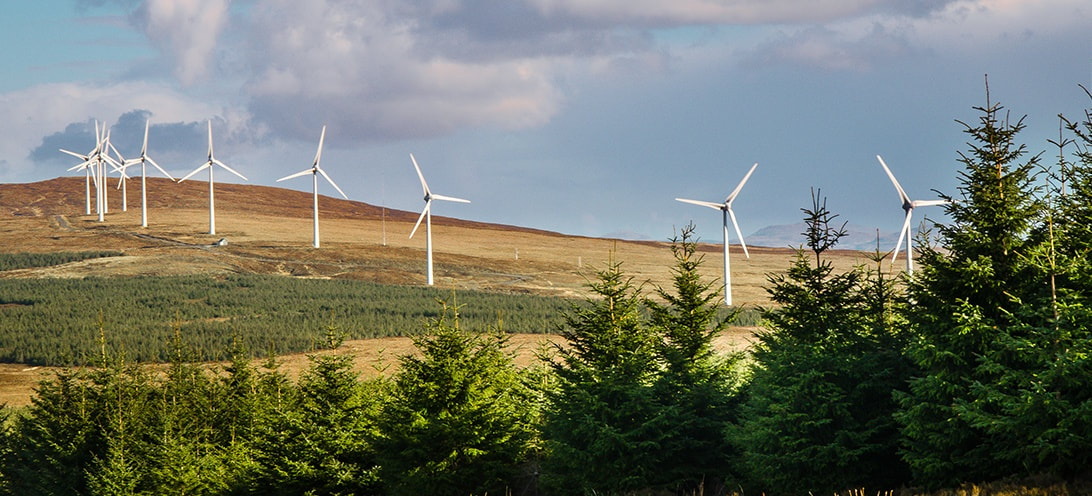
Scotland has some of the greatest renewable energy resources in Europe. Our coast, weather, and geographic position give us enormous potential to develop offshore and onshore wind. The revenue generated could create jobs, strengthen communities and invest in public services.
But the question we should be asking before celebrating the transition to renewables is:
Who will own Scotland’s energy?
Having a resource is different from owning it. Scotland’s seen this all before during the North Sea oil boom. Oil transformed the British economy and made enormous amounts of money. Yet Scotland did not create a publicly owned oil industry or a sovereign wealth fund comparable to the likes of Norway’s. The oil was valuable, but simply having oil below the Scottish waters did not automatically mean that just any ordinary Scot would become wealthy from it.
There was an attempt to take a different approach, in 1975 the Labour government formed the British National Oil Corporation (BNOC), a publicly owned corporation intended to give the state a stake at the North Sea oil and gas. This happened when Tony Benn was energy secretary. However, under Margaret Thatcher, BNOC’s oil producing operations were transferred over to Britoil and its remaining government shareholding was sold off. Public ownership therefore was not simply an idea that was never tried, it was an approach that was reversed.
We have a crucial opportunity to do things differently, but there is also a danger we make the same mistake.
The New North Sea
For years Scotland was told oil was the future, now it’s renewables. The scale of development could fundamentally reshape our country.
And the scale is already enormous. In 2025, Scotland generated a record 38.5 TWh of renewable electricity, with 30.8 TWh coming from wind. To put that into perspective that is enough to match the annual consumption of millions of households.
But imagine Scotland becoming one of Europe’s biggest producers of renewable electricity while many of the companies developing, owning, and profiting from that infrastructure are private corporations.
In many ways, the technology and environmental consequences have changed. But the risk posed by economic arrangements remains terribly similar.
Who owns it?
The answer is largely private shareholders and multinational corporations, then Scotland risks becoming a place where energy is produced rather than a place where energy wealth is controlled.
A socialist alternative offers another possibility. What if Scotland treated renewable energy as a form of common wealth?
Instead of asking about how much profit can be extracted from wind farms, we should be asking what those wind farms can provide for society. Could they help build affordable housing? Could they help reduce our energy bills? Could they fund public transport? Could they finance new industries? Could they provide new skilled jobs for workers? Could they help create a publicly owned energy system capable of providing affordable, secure and clean energy for generations to come?
That is the difference between seeing energy as a commodity and seeing it as a public resource. The wind belongs to nobody; the sea belongs to nobody.
The question therefore is not whether somebody should be allowed to make money from renewables, the question is why private ownership should automatically be the default.
Beyond producing energy, there is another problem. Scotland should not become Europe’s big battery. If Scotland was going to invest billions into renewable energy, we should be asking where the manufacturing happens. Where are the turbines made? Where are the engineers trained? Where are the batteries manufactured? Where are the cables made? Where are the ships built?
If Scotland simply produces electricity while all the high value technologies are made elsewhere, we risk repeating an old economic pattern. We export the resources, someone else controls the technology, someone else owns much of the infrastructure, someone else receives enormous amounts of the profit and Scotland is left with the job of producing it.
That is not a green Industrial Revolution. It’s just extraction from a different resource.
Scotland has a choice. None of this means renewable energy development is bad. Renewable energy could be one of the greatest economic opportunities Scotland has been faced with for generations.
And the scale of that opportunity is clear. By the end of June 2026, there were 1,253 renewable energy projects in Scotland’s planning pipeline, with an estimated combined capacity of 99.4 GW. The 99.4 GW includes storage and other renewable technologies, not just electricity generation capacity.
But opportunities don’t automatically benefit everyone. They, of course, depend on political decisions.
Scotland can choose an energy system dominated by private ownership, where renewable power becomes another financial asset traded for profit. Or Scotland can instead choose public and community ownership, where energy becomes a part of a wider project of building a more equal society.
This is not just an argument for independence; an independent Scotland could still allow multinational corporations to dominate its energy industry. A Scotland inside the Union could still create publicly owned energy. Independence does not automatically create socialism, but independence could give Scotland greater control over decisions that would determine what happens with our resources.
The question: what happens when a country possesses enormous natural wealth but doesn’t have enough control over how that wealth is owned and used? A chance to build lasting public wealth.
Scotland should not make the same mistake twice.
The renewable revolution could become a story of wealth exiting Scotland again, or it could be something of interest to ordinary people.
Scotland has the wind. The question is whether Scotland will own it.


Leave a Reply