
Wildfires shine a light on fire and rescue service cuts
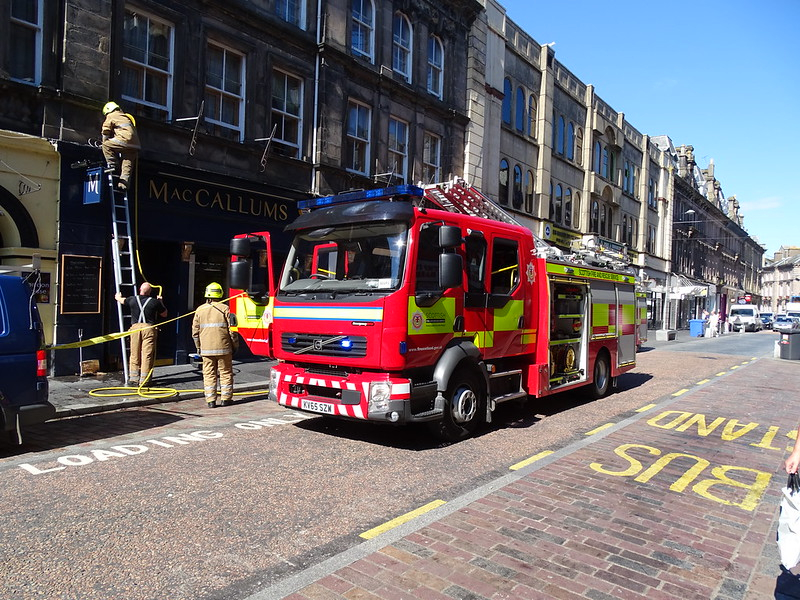
The outbreak of numerous wildfires in Scotland has been news headlines in recent weeks. SSP national trade union organiser Richie Venton spoke about this to Colin Brown, the Fire Brigades Union National Executive Committee member for Scotland.
Are the recent outbreaks of wildfires in Scotland unusually frequent?
Well, it feels unusual to us, with so many in such a short period of time. For instance, last weekend there were 90 callouts. But the scientists tell us there is not enough historic data to show whether it’s a big increase.
March was the driest on record. There is a definite change in the climate. The early Spring is a period of high wildfire risk; soil moisture is lower, and it’s further reduced by frost, which dries up the soil surface.
Thankfully there have been no fatalities or significant injuries this time, but there have been evacuations of people from their homes, because the wildfires are getting closer and closer to urban areas — not just out in rural districts — including near Edinburgh and Glasgow.
Can the Scottish Fire and Rescue Service cope?
That’s a good question. Service management will always say we will respond and deal with wildfires. But the significant size of these incidents makes them almost beyond human intervention.
We see the limited impact of human intervention, of firefighters on the ground, in the wildfires in parts of California, Greece or Spain.
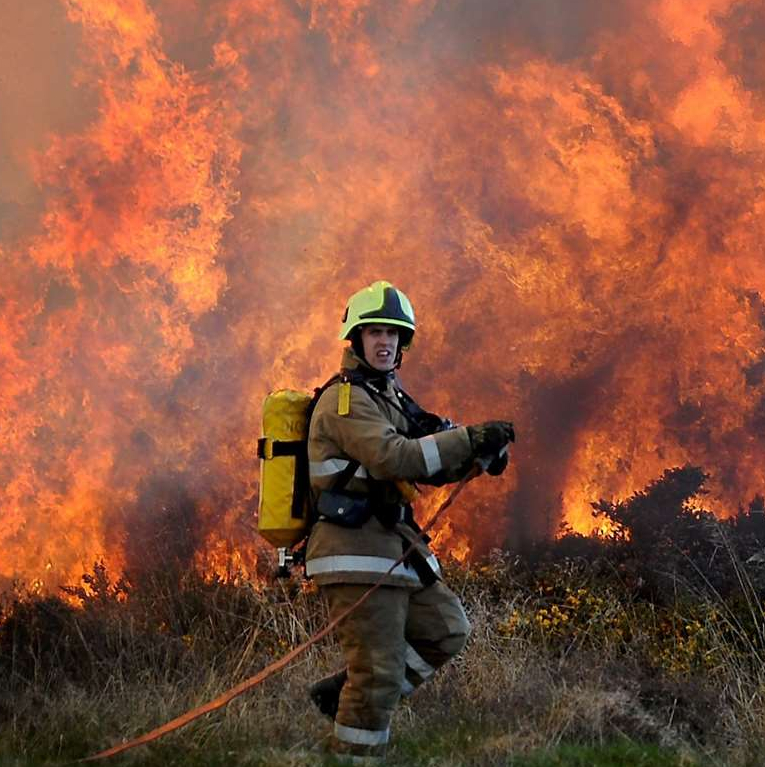
There are a number of specialist units in Scotland, specialising in wildfires, but it’s a crushingly small number who are trained and equipped to that level, or have the appropriate Personal Protective Equipment (PPE).
For example, if you picture firefighters in the usual golden PPE uniforms walking a mile up a hill to a wildfire, the problem is that what we call structural firefighting kit not only keeps the heat out, but also keeps it in. So, you need specialist kit to deal with wildfires. There are some helicopters in Scotland, but there may not be enough of them.
Have cuts to staffing over the years impacted on the ability to cope with wildfires?
Cuts in staffing in recent years — with the loss of 1,250 posts since the single Scottish Fire and Rescue Service was established 13 years ago — has a definite effect.
If you’re sending, say, six pumps to an incident, that’s 30 firefighters, plus the command and control staff involved. Wildfires, live and ongoing incidents, can last days, if not weeks. That involves that level of resources committed for 24 hours a day, and you need rest periods, so it also involves rotation and replacement.
This also adds to all the exposure to firefighting contaminants which FBU research has already revealed; extensive exposure to the health risks, with no ability to shower or decontaminate. Fighting wildfires puts a laser focus, a magnifying glass, on all these issues.
Have the Scottish Government invested adequately to cater for these issues?
The Scottish Government will always claim they’ve increased the Fire and Rescue Service budget, but it’s quite irritating to hear this constantly repeated, because it is not reflected in reality on the ground. It doesn’t allow for inflation and increased operational costs. The purchasing power for the service in these budgets has not even stood still, it’s gone down. There’s been no recruitment to replace the firefighters and control staff lost over the years.
Subscribe now to receive the regular Voice newspaper PDF
https://scottishsocialistvoice.wordpress.com/subscriptions/
 Scottish Socialist Voice
Leave a comment